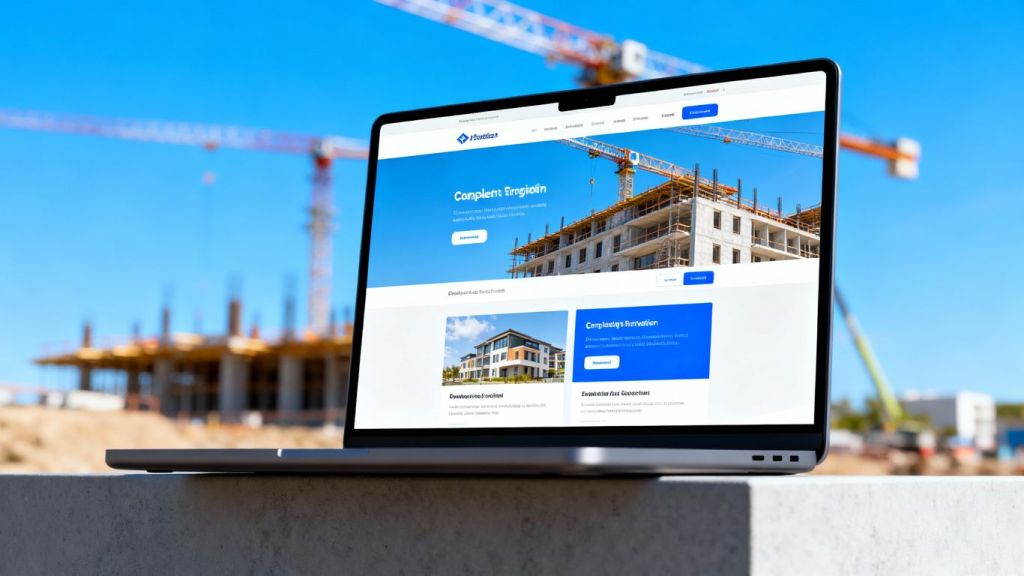
Keeping a contractor website up-to-date is more than just a good idea; it’s important for attracting new clients and showing current ones that we’re active and reliable. A stale website can make a business look like it’s not busy or that it doesn’t care about its online presence. We’ve put together some thoughts on how to make sure our contractor website design stays fresh and keeps visitors interested. It’s about making a good first impression and keeping people engaged.
Key Takeaways
- Regularly add new project photos and details to show off recent work. This helps potential clients see the quality of our services.
- Keep testimonials current. Old reviews don’t show what we’re doing now, so get recent feedback from happy customers.
- Make sure the website works well on phones and tablets and loads quickly. People often look up contractors on the go, and a slow or broken site will turn them away.
1. Showcase Recent Projects
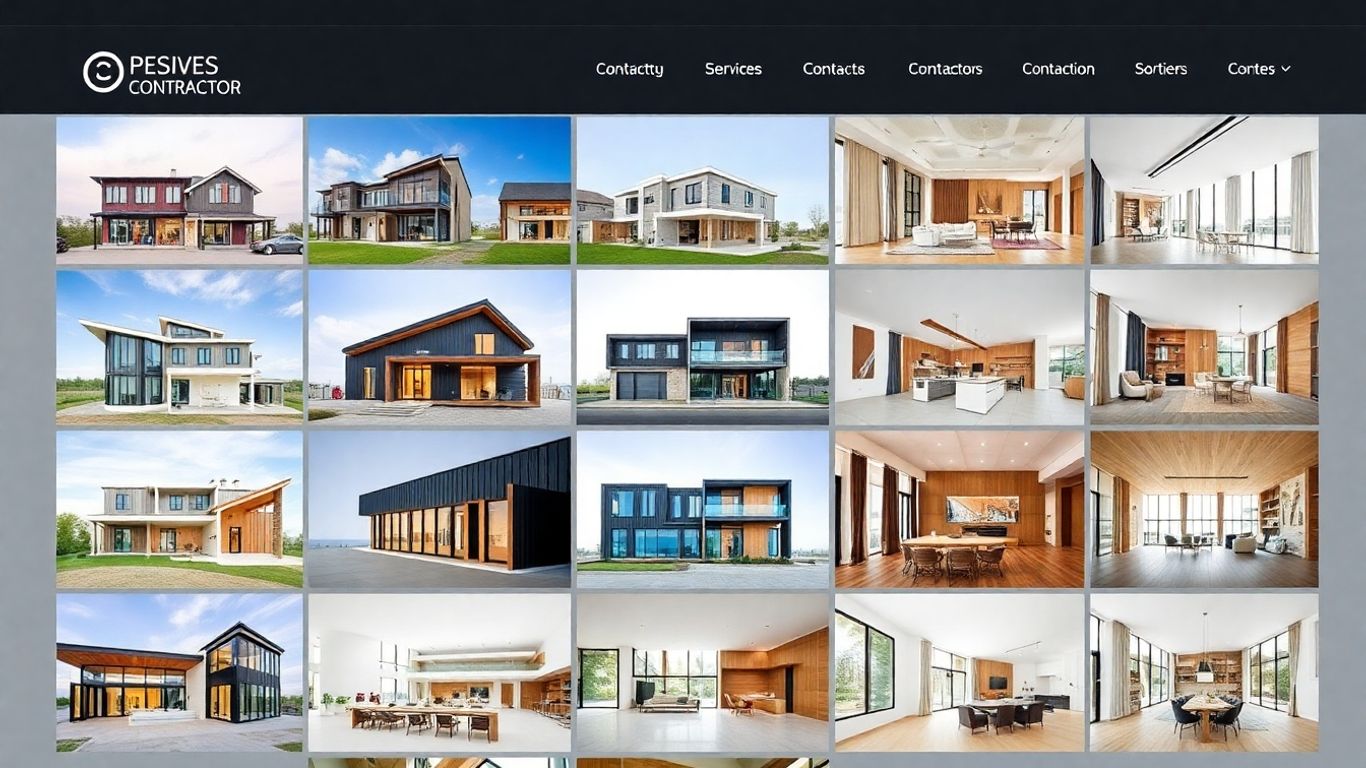
We believe that showing off our latest work is one of the best ways to demonstrate what we can do. It’s not just about listing services; it’s about providing real examples of our skills in action. Our portfolio is a living document, constantly updated with our newest and most impressive projects.
When potential clients visit our site, they want to see proof. They want to see the quality of our craftsmanship, the scope of our capabilities, and the types of challenges we’ve successfully overcome. A well-presented project gallery speaks volumes more than any descriptive text.
Here’s what we focus on when adding new projects:
- High-Quality Visuals: We use clear, professional photos and videos that highlight the details of the work. Good lighting and different angles are key.
- Project Details: We include a brief description of the project, the client’s needs, the solutions we provided, and the final outcome. This gives context.
- Location and Scope: Knowing where we’ve worked and the size of the projects helps clients see if we’re a good fit for their specific needs.
- Client Testimonials (if available): Linking a specific project to a happy client’s feedback adds a powerful layer of trust.
We try to categorize projects so visitors can easily find examples relevant to their own interests. Whether it’s a kitchen remodel, a new deck build, or a commercial renovation, we want people to find what they’re looking for quickly.
Keeping our project showcase current means we’re always looking back at what we’ve accomplished and thinking about how to present it best. It’s a good reminder for us, too, of the progress we’re making and the satisfaction our clients feel.
2. Update Testimonials Regularly
We all know that happy clients are our best advertisement. That’s why keeping our testimonials fresh and current is so important. Old reviews can start to feel a bit stale, and potential customers want to see what people are saying about our work right now.
Think about it: would you rather trust a review from last week or one from five years ago?
Here’s why we make it a point to update them:
- Shows Current Satisfaction: New testimonials prove that we’re still doing great work and keeping our clients happy.
- Reflects Recent Projects: They can highlight specific projects or services we’ve recently completed, giving a clearer picture of our capabilities.
- Builds Trust: Regularly updated feedback feels more genuine and builds stronger trust with visitors.
- Keeps Content Dynamic: It’s another way to keep the website from looking static and forgotten.
We try to gather feedback after every completed job. Sometimes we’ll even reach out to past clients we know were particularly pleased with their results. It doesn’t take much effort, and the payoff is huge.
We find that asking clients for a quick quote or a star rating after a project wraps up is the easiest way to get new material. Most people are happy to share their positive experiences if it’s simple for them.
We also make sure to include a variety of feedback. If we get a lot of comments about our punctuality, we’ll make sure those are visible. If clients rave about our cleanup process, we highlight that too. It gives a well-rounded view of what makes us stand out.
3. Feature Team Member Spotlights
We often focus on the finished projects, which is great, but let’s not forget the people who make it all happen. Featuring your team members on your website is a smart move. It adds a personal touch that clients really appreciate. Think of it as introducing the faces behind the work. This human element builds trust and makes your company more approachable.
When we put together these spotlights, we try to go beyond just a name and title. We include a bit about their background, what they enjoy about their work, and maybe a fun fact. It helps potential clients connect with your team on a more personal level. It shows that you have real people with real skills working for you.
Here’s a simple way we approach creating these spotlights:
- Gather basic information: Name, role, years with the company, and a brief professional summary.
- Ask a few personal questions: What do they like most about their job? What’s a project they’re proud of? What do they do outside of work?
- Get a good photo: A clear, friendly headshot makes a big difference.
- Write a short bio: Keep it engaging and easy to read.
We find that clients often mention these spotlights when they reach out. It gives them something to talk about and shows them we’re not just a faceless company. It’s a simple way to make your website feel more alive and less like a brochure.
Showing off your team isn’t just about filling space; it’s about demonstrating the collective talent and personality that drives your business forward. It’s a direct way to communicate your company culture and the quality of the individuals clients will be working with.
4. Share Industry News and Insights
Keeping our website fresh means more than just showing off our latest jobs. We also need to think about what’s happening in our field. Sharing relevant industry news and insights positions us as knowledgeable and current. It shows clients we’re not just doing the work, but we understand the bigger picture.
Think about it: when potential clients visit, they’re looking for someone who knows what they’re talking about. Posting about new building codes, innovative materials, or even trends in home design can really make us stand out. This kind of content demonstrates our commitment to staying informed and ahead of the curve.
Here are a few ways we can do this:
- Summarize recent articles: Find interesting articles about construction, renovation, or our specific trade. Write a short summary and add our take on it. What does this mean for homeowners or businesses in our area?
- Comment on new regulations: If there are changes to local building laws or safety standards, we can explain what they are and how they might affect projects.
- Discuss new technologies: Are there new tools or methods making waves in our industry? We can talk about what they are and if we’re using them or considering them.
- Share tips based on trends: If there’s a growing interest in, say, energy-efficient upgrades, we can share practical tips related to that.
It doesn’t have to be a daily thing, but a regular update, maybe once a month or every couple of weeks, can make a big difference. It gives people a reason to come back to our site, not just to see our work, but to learn something too.
We should aim to make our website a resource, not just a brochure. When we share useful information, we build trust and show we care about more than just the next contract. It’s about being a helpful voice in the industry.
This approach helps with SEO too. Search engines like fresh, relevant content. So, by sharing news and insights, we’re not only helping our visitors, but we’re also making our site more visible.
5. Highlight Special Offers and Promotions
We often find that keeping our website current means more than just showing off our latest work. It’s also about making sure potential clients know about any deals we’re running. A well-placed promotion can be a strong reason for someone to choose us right now. Think about it: if a customer is comparing contractors, a limited-time discount or a special package deal can really tip the scales. We make sure to update this section whenever we have something new to offer.
Here are some ideas for promotions we can feature:
- Seasonal discounts (e.g., spring cleaning specials, winterization packages)
- Package deals for multiple services (e.g., kitchen remodel + bathroom update)
- Referral bonuses for existing clients
- First-time customer introductory offers
We also think about how to present these offers. Sometimes a simple banner works, but other times, a dedicated page with all the details is better. We try to make it clear what the offer includes, how long it’s valid, and how someone can claim it. It’s all about making it easy for people to see the benefit.
We’ve noticed that clearly stating the value proposition of a promotion helps a lot. Instead of just saying ‘10% off,’ we might say ‘Save $500 on your next roofing project this month only!’ It gives a clearer picture of the savings.
We also consider timing. If we’re promoting a service that’s popular during a certain season, we’ll make sure the promotion aligns with that. For example, promoting air conditioning tune-ups in late spring makes a lot of sense. It’s about being relevant and timely.
6. Optimize for Mobile Responsiveness
We all know people look at websites on their phones a lot these days. If your contractor site doesn’t look good or work right on a smaller screen, you’re probably losing business. Making sure your website is mobile-friendly isn’t just a nice-to-have anymore; it’s a must-have.
Think about it: a potential client is driving around, sees a project you did, and pulls out their phone to look you up. If your site is all jumbled up, hard to read, or the buttons are too small to tap, they’ll likely just move on to the next contractor. We want them to have a good experience, right?
Here’s what we focus on:
- Readable Text: Fonts should be large enough to read without zooming.
- Easy Navigation: Menus and buttons need to be simple to use with a thumb.
- Fast Loading: Images and pages should load quickly, even on a slower mobile connection.
- No Horizontal Scrolling: Content should fit neatly within the screen width.
We’ve seen a big difference in how many people contact us after we made our site work better on phones. It’s not complicated, but it takes attention to detail. We check how our site looks on different phones and tablets regularly. It’s about making it easy for anyone, anywhere, to see what we do and get in touch.
We aim for a clean, straightforward experience for every visitor, no matter the device they’re using. This means less frustration for them and more chances for us to connect.
We also pay attention to how fast pages load. Slow sites are a big turn-off. We try to keep our image sizes reasonable and our code clean. It’s a bit of a balancing act, but worth the effort. We want people to find us easily and like what they see from the first click.
7. Improve Website Loading Speed
We all know how frustrating it is to wait for a website to load. If your contractor site is slow, people will just leave. Faster loading times mean happier visitors and more chances to get new business. It’s really that simple.
What makes a site slow? Often, it’s big image files. We need to make sure our pictures are sized right for the web. Also, too many plugins or scripts can bog things down. We should check our site’s speed regularly. Tools like Google PageSpeed Insights can give us a good idea of where we stand.
Here are a few things we can do:
- Compress images: Use tools to make image files smaller without losing too much quality.
- Minimize code: Clean up our HTML, CSS, and JavaScript files.
- Use browser caching: This helps repeat visitors load the site faster.
- Choose good hosting: A slow server will make any website crawl.
We’ve noticed that even a few extra seconds of loading time can make a big difference in how many people stick around. It’s worth the effort to get this right.
We should also think about our mobile experience. A lot of people will look at our site on their phones. If it’s slow there, it’s a double whammy. Let’s aim for a site that loads quickly on any device.
8. Integrate Social Media Feeds
We all know social media is a big part of how people connect these days. For our websites, this means we should think about showing what we’re up to on platforms like Instagram, Facebook, or LinkedIn right on our own pages. It’s a simple way to show potential clients that we’re active and engaged.
Think about it: someone visits your site, sees a feed of your latest completed jobs on Instagram, or maybe some positive customer comments from Facebook. This adds a layer of real-time proof to your services. It makes the site feel more alive than just static pages.
Here’s why we think it’s a good idea:
- Shows Current Activity: It proves you’re not just sitting back. New posts mean new work or new thoughts.
- Builds Trust: Seeing real people and real projects shared publicly can make visitors feel more comfortable choosing you.
- Keeps Content Fresh: Social media posts are usually current. Pulling them in means your website gets new content without you having to write a whole new page.
- Drives Traffic: Links in your social posts can lead people back to your website, and vice-versa.
We usually put these feeds in a dedicated section, maybe on the homepage or a ‘Connect With Us’ page. It doesn’t have to be complicated. Just a simple embed that pulls in your latest posts. We find that clients often spend a bit more time on sites that have these dynamic elements. It’s a good way to give them more reasons to stick around and learn about what we do.
We’ve noticed that when we show our social feeds, people tend to click through to our profiles more often. It’s like a little bridge between our website and our social presence, making it easier for folks to follow us wherever they prefer to connect.
9. Add a Blog Section
We’ve found that adding a blog section to our website has been a game-changer for keeping things fresh and engaging. It’s not just about posting articles; it’s about creating a space where we can share our knowledge and connect with potential clients on a deeper level. A well-maintained blog can significantly boost your website’s visibility and establish you as a go-to resource in your field.
Think of your blog as a dynamic part of your online presence. Instead of just listing services, you can use it to talk about common problems homeowners face, explain different materials, or even share tips for maintaining their properties. This kind of content is incredibly useful for visitors who are in the research phase of hiring a contractor.
Here are a few ideas for blog content:
- Project Spotlights: Go behind the scenes of a recent job. Talk about the challenges, the solutions, and the final outcome. Include before-and-after photos if possible.
- How-To Guides: Simple guides on tasks related to your trade, like "How to Prepare Your Home for a New Roof" or "Choosing the Right Paint Finish."
- Industry Trends: Discuss new materials, techniques, or regulations that might affect homeowners.
- Seasonal Advice: Offer tips relevant to the time of year, such as "Winterizing Your Plumbing" or "Spring Yard Maintenance."
We also like to use the blog to answer frequently asked questions. It saves us time answering the same questions repeatedly and provides helpful information directly on our site. It’s a win-win.
Regularly publishing new content signals to search engines that your site is active and relevant. This can help improve your search rankings over time, bringing more organic traffic to your website. It’s a long-term strategy, but one that pays off.
Don’t feel pressured to write lengthy articles every time. Sometimes, a short, informative post is all that’s needed. The key is consistency. Aim for a schedule you can stick to, whether it’s weekly, bi-weekly, or monthly. This consistent flow of fresh content keeps visitors coming back and shows you’re actively engaged in your business and your community.
10. Refresh Visual Design Elements
Our website is often the first impression potential clients have of our business. If it looks dated, it can make us seem out of touch. We need to periodically update our site’s look and feel to keep it current and appealing. Think about the colors we use, the fonts, and the overall layout. Are they still reflecting our brand well? Maybe our logo has been updated, or we’ve expanded into new service areas that aren’t visually represented.
We should consider a few things when refreshing our visual design:
- Color Palette: Are our current colors still vibrant and representative of our company’s personality? Sometimes a simple shift to a more modern or complementary palette can make a big difference.
- Typography: Font choices matter. Overly common or dated fonts can make a site feel old. We should look for clean, readable fonts that align with our brand’s tone.
- Imagery: Stock photos can quickly make a website look generic. Using high-quality, original photos of our work, our team, and our completed projects is much more impactful.
- Layout and Spacing: A cluttered or poorly organized layout can be off-putting. We should aim for clean lines, ample white space, and a logical flow that guides the visitor’s eye.
It’s not just about making things look pretty, though. A visual refresh can also improve usability. A cleaner design often means a more intuitive user experience, making it easier for visitors to find the information they need. We might also want to think about incorporating some subtle animations or interactive elements, but we have to be careful not to overdo it. Too much can slow down the site and become distracting.
A consistent visual identity across all our platforms, including our website, builds trust and recognition. When our website looks professional and up-to-date, it signals that we pay attention to detail in all aspects of our work.
We don’t need a complete overhaul every year, but a thoughtful refresh every couple of years can keep our online presence sharp. We can start by looking at competitor websites and popular design trends in our industry to get some ideas. Then, we can decide what changes will best represent our company and attract new clients.
Wrapping It Up
So, we’ve talked about a few ways to keep your contractor website from feeling stale. It’s not rocket science, really. Just a bit of regular attention can make a big difference. Think about updating photos, adding new projects, and making sure your contact info is easy to find. We don’t want potential clients clicking away because they can’t figure out how to get in touch or because the site looks like it’s from the last decade. A little effort goes a long way in showing you’re still active and ready for business. Let’s keep those sites looking good and working hard for us.
Frequently Asked Questions
Why should we keep our contractor website looking new?
We should keep our website looking new because it shows clients we are active and care about our work. A fresh site looks more trustworthy and professional, making people more likely to choose us for their projects. It’s like keeping our storefront tidy – it makes a better first impression.
How often should we add new projects or updates to our website?
It’s a good idea to add new projects or updates whenever we finish a significant job. Showing off our latest work helps potential clients see what we’re capable of right now. Even small updates, like adding a new photo or a brief description, can make a big difference in keeping the site lively and current.
What’s the easiest way to make our website more interesting for visitors?
One simple way to make our website more interesting is to share stories about our team members. People like to know who they’re working with. Also, adding a blog where we share helpful tips or news about our industry can attract visitors and show we know our stuff. Keeping things visual with good pictures and videos also helps a lot.